
Hail Just Hit Austin: What to Do in the First 48 Hours
If hail just came through your neighborhood, take a breath first. Nobody needs to solve everything today. The next two days are really about a handful of simple, safe steps that protect you and your home, and make things easier down the road, whether or not you end up filing a claim.
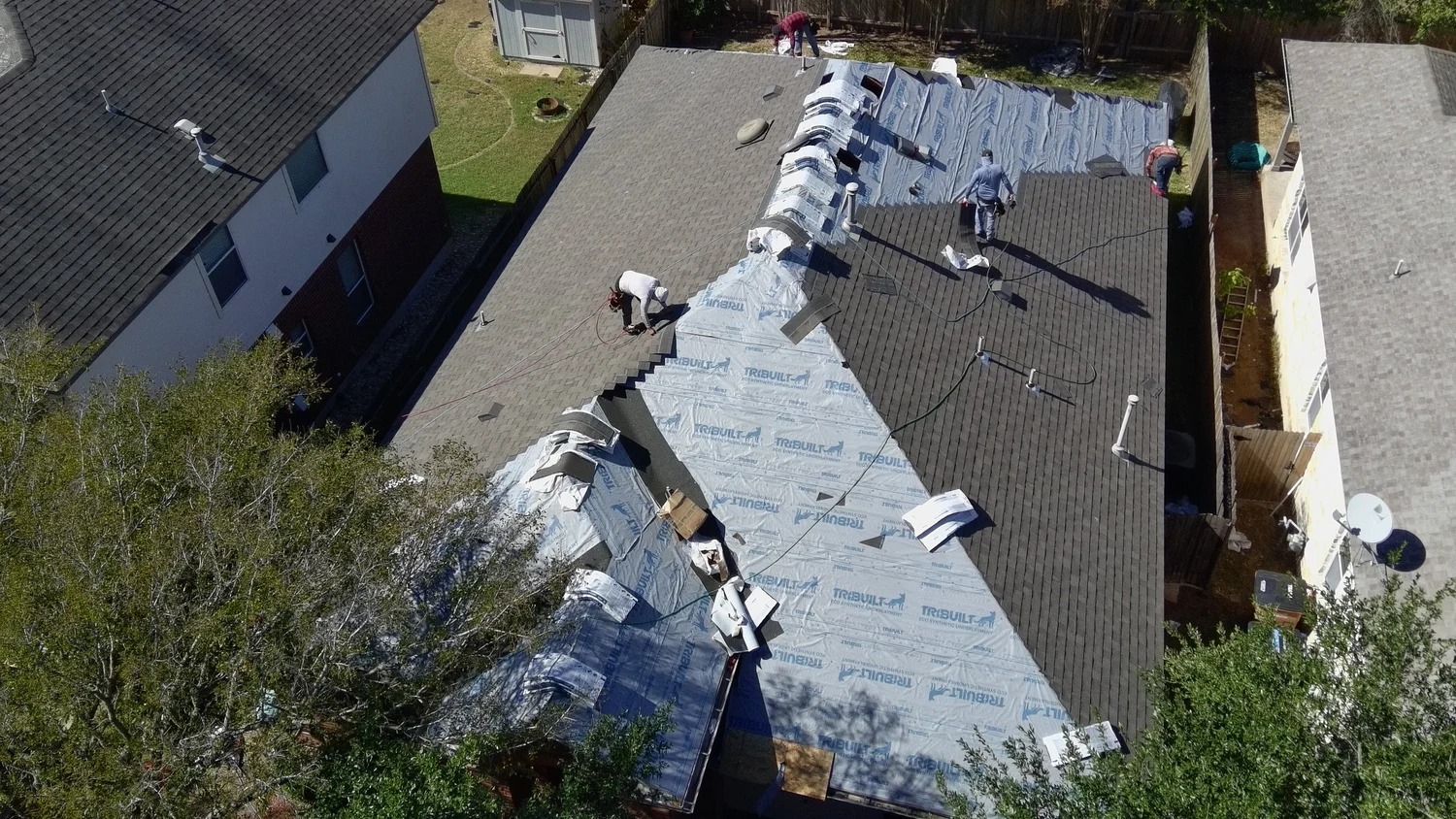
Step 1: Safety first, stay off the roof
It’s tempting to grab a ladder and go look. Please don’t. Hail-slicked shingles, wet gutters, and hidden soft spots make roofs dangerous even for people who climb them every day. A fall is a much bigger problem than any roof damage. Everything you need to do in the first 48 hours can be done with both feet on the ground.
Step 2: Document what you can see from the ground
Insurance adjusters rely heavily on ground-level evidence, so this is the most useful thing you can do, and it’s completely safe. Walk your property and take photos of anything hail touched:
- Hailstones themselves. If any are still on the ground, photograph one next to a coin or a ruler so the size is obvious. Do this as soon as you can; hail melts fast.
- Gutters and downspouts. Look for fresh dents or dings.
- AC unit fins. Hail dents the thin metal fins on outdoor AC/condenser units in a very recognizable pattern, and adjusters know to check them.
- Window screens. Torn mesh or bent frames.
- Mailboxes, fences, and vehicles. Dents on hard metal surfaces are strong, easy-to-read evidence of hail size and impact.
Take more photos than you think you need, from a few angles, and make sure your phone’s date and time stamp is turned on so each photo is timestamped automatically. Jot down the date and rough time of the storm too. You’ll want that later.
Step 3: Check inside, ceilings and attic

Walk through your house and look up. A few things worth checking:
- New water stains or discoloration on ceilings, especially in upstairs rooms or near the attic.
- Any dripping, damp spots, or musty smell.
- If you can safely access your attic, look for daylight coming through the roof deck, wet insulation, or water on the floor.
Don’t panic if you don’t see anything. That’s actually normal, and it doesn’t mean the roof is fine. Hail damage very often doesn’t show up inside the house until much later, sometimes after another rain.
Step 4: Tarp only if it’s safe, and better, let a professional do it
If you have an active leak dripping into your home, protecting the inside matters. Move furniture, put down buckets and towels, and if you have visible ceiling damage, a small ceiling hole can sometimes relieve pressure and stop it from spreading, but this is optional and only if you’re comfortable doing it. Do not get on the roof yourself to tarp it. Wet, hail-damaged roofs are one of the more dangerous places to be after a storm. A roofing company can install an emergency tarp safely and correctly, so the leak doesn’t get worse while you wait for repairs.
Step 5: Get a professional inspection within days, not weeks
This is the step that surprises people most: hail damage is often invisible from the ground, even to a trained eye looking up from the yard. Bruised shingles, cracked seals, and granule loss usually can only be confirmed by someone actually on the roof, checking slope by slope. On top of that, most insurance policies have filing windows for storm damage. Waiting too long can complicate a claim even when the damage is real. Getting a roof inspected within the first few days after a storm, while the event is fresh and easy to document, puts you in the strongest possible position either way.
How the insurance process actually starts
It helps to know who does what. As the policyholder, you are the one who files the claim with your insurance company. That step has to come from you. From there, our role is straightforward: we document the damage thoroughly with photos and notes, meet your adjuster on-site to walk the roof together, and guide you through the process from that first inspection through the paperwork. Storm damage is often covered, and clear documentation is usually what makes the difference between a smooth claim and a disputed one.
Watch out for storm-chasers
After any big hail event, out-of-town crews show up fast, sometimes within hours. Be cautious of contractors who knock door-to-door, drive vehicles with out-of-state plates, pressure you to sign a contract on the spot, or ask for a large deposit before any work is done. Also be very wary of anyone who offers to “waive,” “cover,” or “eat” your deductible as a sales incentive. That’s not a deal, it’s illegal under Texas Insurance Code chapter 707, and it should be a red flag about how the rest of the job will go. A legitimate local roofer will have a real local address, references you can check, and proof of insurance, and won’t need to rush you into anything.
Keep your receipts
If you spend money on emergency measures (a tarp, buckets, a hotel stay because of a serious leak, anything reasonable to prevent further damage), keep every receipt. Insurance policies often reimburse reasonable emergency expenses, and having the paperwork ready makes that part of the process much simpler.
Your first-48-hours checklist
- Stay off the roof. No ladders, no climbing.
- Photograph hailstones next to a coin or ruler before they melt.
- Photograph dents on gutters, AC fins, window screens, and mailboxes.
- Make sure your phone’s timestamp is on; note the storm date and time.
- Check ceilings for stains and, if safe, the attic for daylight or wet spots.
- Protect the inside of your home from active leaks; let a professional tarp the roof.
- Schedule a professional roof inspection within the next few days.
- File your claim with your insurance company as the policyholder.
- Say no to door-to-door pressure, big upfront deposits, and any “deductible deal.”
- Keep receipts for any emergency repairs or expenses.
Hail damage is stressful, but it’s manageable when you take it one step at a time. You don’t have to figure out the roof part on your own.
Hail just came through your area?
Get a free, no-pressure inspection. We document the damage, meet your adjuster on-site, and guide you through the process. Call or text (857) 237-1884, Rush Builders Roofing and Solar, Pflugerville, TX. Se Habla Español.
